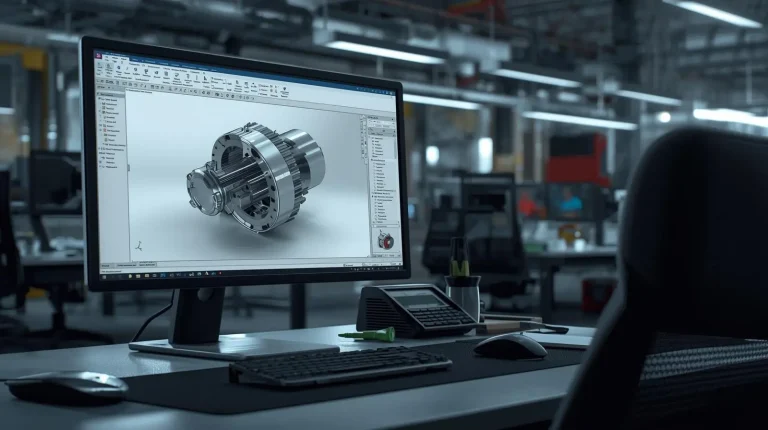
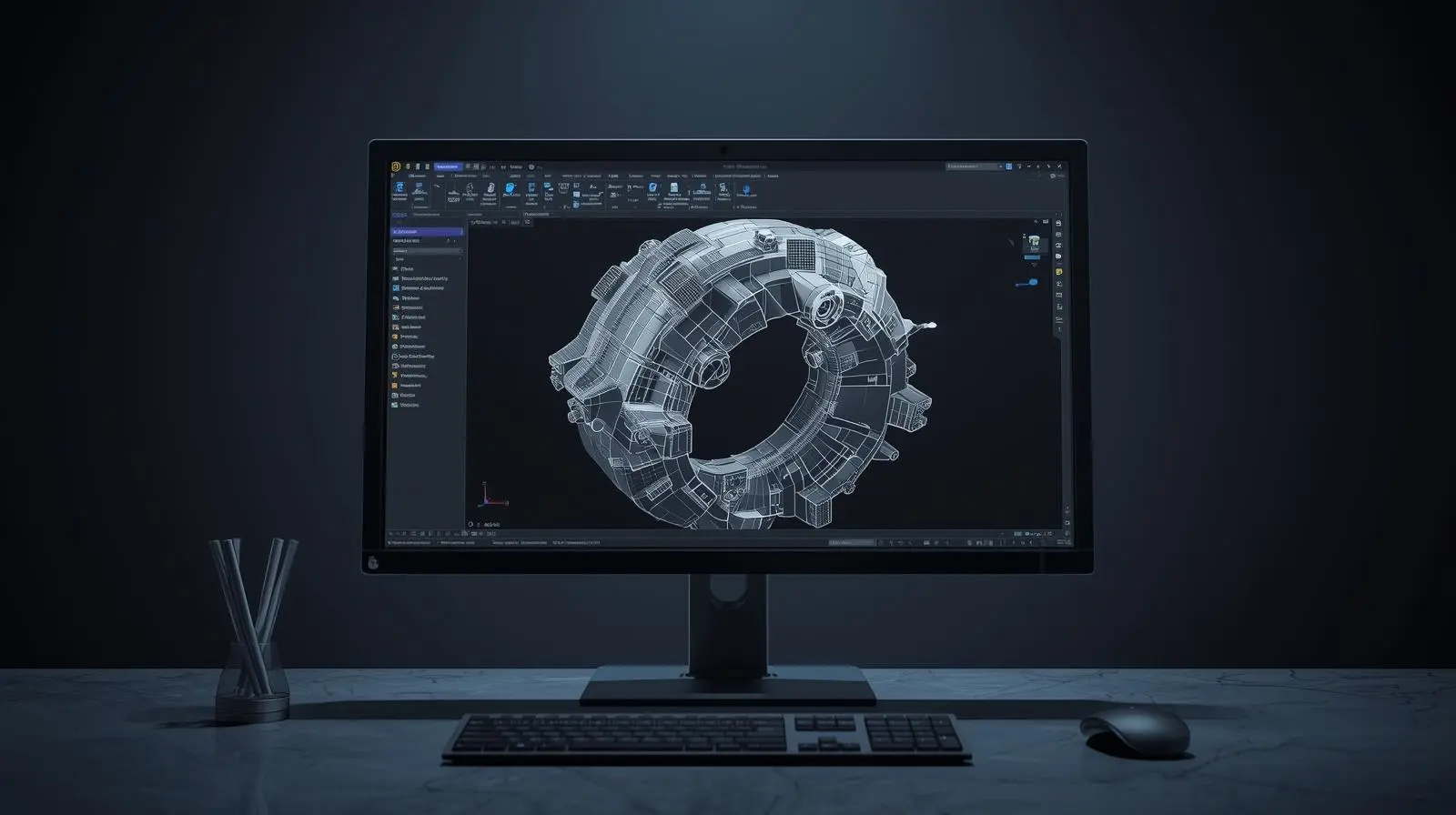

STL to Solidworks – Modern engineering projects often rely on existing physical parts, legacy components, or scanned geometries that were never created with native CAD data. In such cases, transforming raw geometric information into a structured, parametric design becomes essential for manufacturing, analysis, and long-term product development.
At STLXYZ, this process is approached as a precision-driven engineering task rather than a simple file operation. The goal is not just to recreate shape, but to rebuild intelligence into the model—ensuring every surface, feature, and dimension is usable within professional design environments.
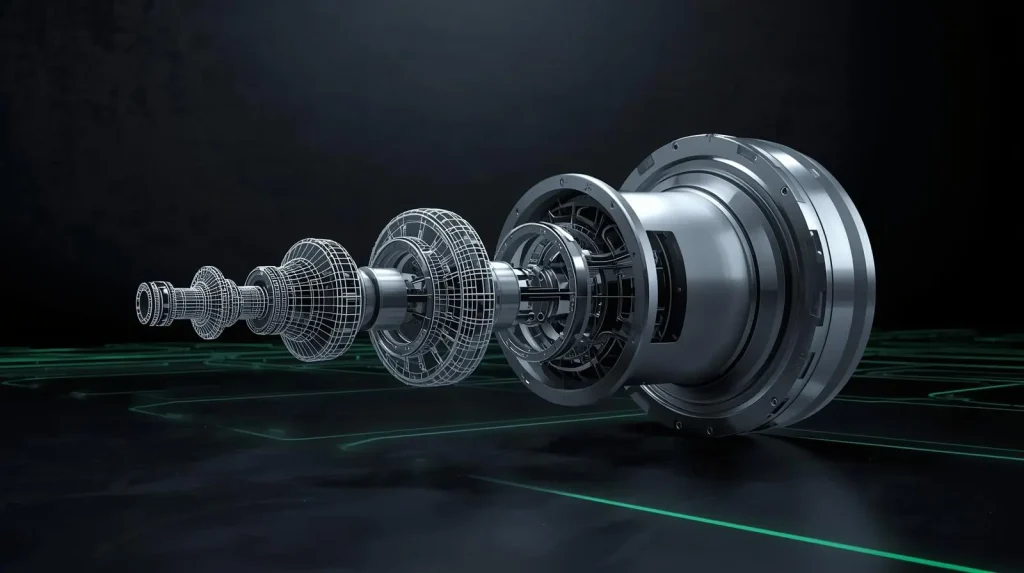
Understanding the Challenge of Mesh-Based Geometry
Scan-based files are typically composed of dense polygon meshes. While visually accurate, these datasets lack design intent, feature history, and parametric structure. This makes direct editing, tolerance control, or downstream manufacturing operations extremely difficult.
Engineers often encounter challenges such as:
- Irregular or noisy surface data
- Missing geometric continuity
- Non-uniform wall thicknesses
- Lack of feature definitions
Without proper reconstruction, these limitations can slow down development cycles or introduce costly errors during production.
Rebuilding Design Intelligence
A professional reconstruction workflow focuses on converting visual geometry into mathematically defined surfaces and solid features. This includes identifying functional areas, aligning symmetry, defining reference planes, and recreating features such as fillets, holes, and mating interfaces with full parametric control.
Rather than relying on automated conversions, STLXYZ emphasizes controlled, engineering-grade remodeling. Each model is rebuilt to meet real-world functional requirements, allowing engineers to modify, validate, and manufacture components with confidence.
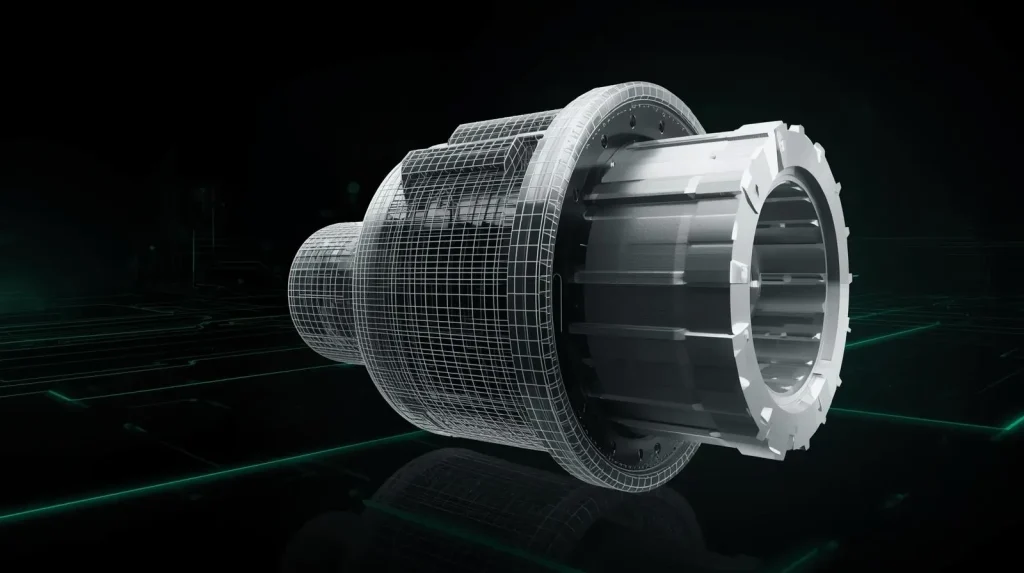
Precision for Manufacturing and Engineering Validation
Editable CAD models play a critical role in multiple stages of product development. Once reconstructed, these models can be used for:
- Design modifications and optimization
- CNC machining and tooling preparation
- Finite element analysis (FEA)
- Assembly validation and tolerance studies
- Documentation and technical drawings
This level of usability is especially important for industries such as automotive, aerospace, industrial machinery, and custom manufacturing, where accuracy and repeatability are non-negotiable.
Why Manual Engineering Matters
Automated conversion tools often promise quick results but fall short when it comes to precision and reliability. They typically generate complex surface patches that are difficult to edit and unsuitable for professional workflows.
STLXYZ follows a different approach—one rooted in engineering judgment. Each project is evaluated individually, ensuring that critical dimensions, functional surfaces, and design intent are preserved or improved during reconstruction. The result is a model that behaves like a native design file rather than a converted approximation.
Supporting Modern Design Workflows
Engineering teams today require flexibility. Whether updating an existing component, replacing an obsolete part, or improving a scanned prototype, having a clean and editable model significantly reduces development time.
By delivering structured CAD data aligned with real manufacturing constraints, reconstructed models integrate seamlessly into modern product development pipelines. This enables faster iterations, clearer collaboration between teams, and more predictable production outcomes.
A Reliable Partner for Digital Reconstruction – STL to Solidworks
With years of experience in scan-based reconstruction and CAD modeling, STLXYZ supports engineers and manufacturers across Europe and beyond. Every project is handled with a focus on accuracy, confidentiality, and practical usability.
The objective is simple: transform complex geometric data into reliable digital assets that engineers can trust—today and in future design iterations.
STL to SolidWorks conversion delivering clean, editable CAD models for professional engineering workflows. Contact us for more information!