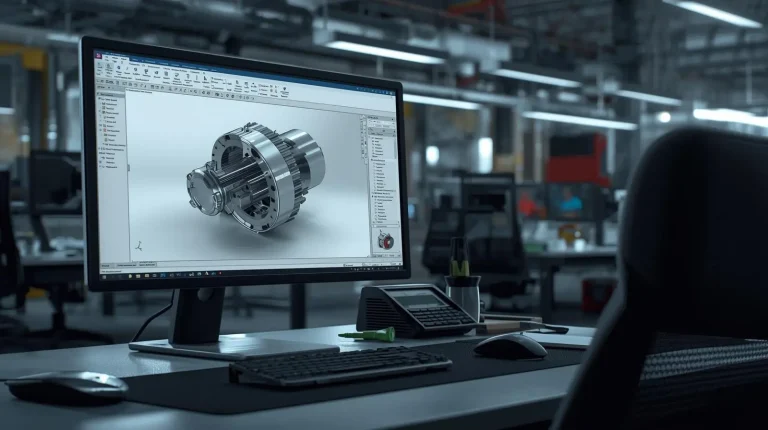

STL Converter – Modern engineering relies heavily on accurate digital representations of physical components. As 3D scanning technologies become more widely adopted, companies now capture complex geometries with unprecedented precision. However, the raw output generated after scanning—typically a triangular mesh—cannot be used directly in most design or manufacturing workflows. Converting this data into editable, parametric CAD models has therefore become a critical step across many industries.
Transforming 3D Scan Data Into Engineering-Ready CAD Models
Although mesh files provide excellent surface detail, they contain no dimensional intelligence. They cannot be modified parametrically, inspected with engineering tolerances, or integrated into assemblies without additional processing. This limitation creates a significant gap between digital reconstruction and practical engineering work.

Why Mesh Formats Require Conversion
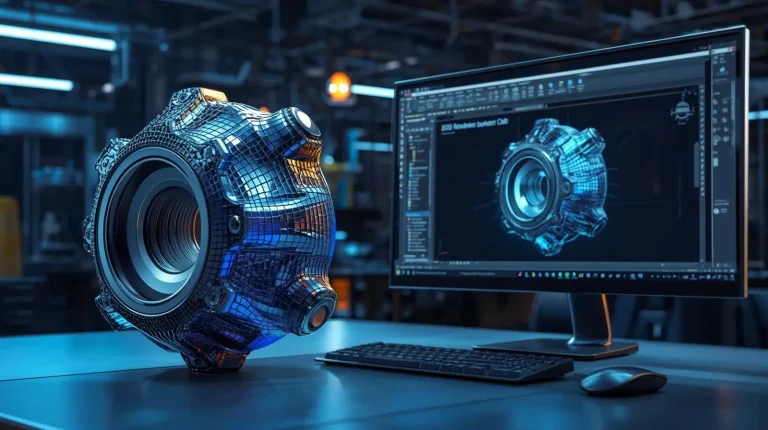
When an object is digitized with structured-light or laser scanners, the resulting mesh is essentially a collection of triangles stitched together to represent the surface of the part. Engineers face several restrictions when working with this format:
- Meshes cannot include sketches, constraints, or editable features
- Dimensional accuracy is difficult to inspect
- Manufacturing environments require solid bodies rather than polygon structures
- File sizes can become extremely large due to the density of scanned data
Because of these limitations, converting mesh-based geometry into true CAD solids is essential before proceeding to reverse engineering, redesign, or tooling development.
How Scan Data Is Converted Into CAD
The transformation process involves several advanced stages to transform an unstructured polygon mesh into clean engineering geometry:
1. Cleaning and Repairing the Mesh
The raw data often contains noise, holes, overlapping polygons, and unwanted artifacts. These are corrected to ensure a watertight model.
2. Segmenting the Surface
Algorithms detect planes, cylinders, freeform areas, fillets, organic shapes, and sharp edges. This step helps separate the model into meaningful design regions.
3. Rebuilding Mathematical Surfaces
Once segmented, the system fits precise surfaces—such as NURBS patches—onto the mesh. This stage defines the geometry in a way that CAD software can fully understand.
4. Creating a Solid Body
The fitted surfaces are joined into a closed volume, allowing the model to function like any other parametric solid.
5. Exporting to Engineering Formats
The final geometry is then exported as STEP, IGES, or a native CAD format, making it suitable for machining, simulation, inspection, and assembly design.
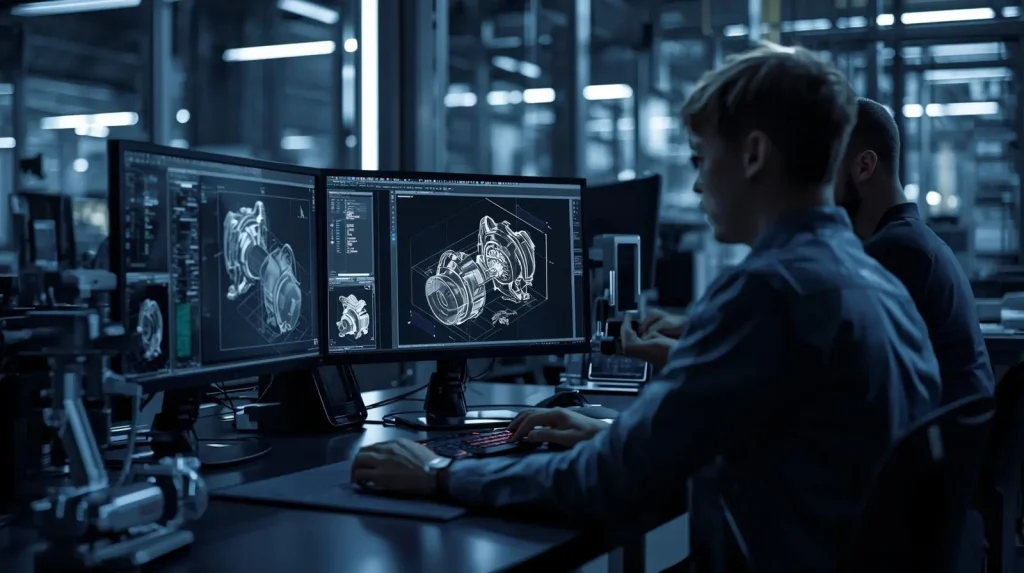
Industry Applications – STL Converter
This conversion workflow is used widely across technical fields:
- Reproduction of legacy parts where no drawings exist
- Reverse engineering for redesign and functional improvement
- Digital archiving of manufactured components
- Tooling and mold development in industrial production
- Quality control by comparing scanned surfaces to reference models
- Product customization, especially in biomedical and ergonomic applications
From aerospace systems to consumer electronics, the ability to turn scan data into accurate, editable geometry accelerates development cycles and reduces engineering costs.
Advantages of a High-Quality Conversion Workflow
Organizations that rely on advanced reconstruction techniques benefit from:
- Highly accurate engineering surfaces
- Fully editable designs suitable for modification
- Compatibility with all major CAD platforms
- Substantial reduction in manual modeling time
- Improved manufacturability and design validation
- Faster turnaround for reverse engineering projects
Basic online solutions often produce simplified shapes or incomplete surfaces. In contrast, professional workflows maintain engineering tolerances and deliver results suitable for production.
Looking Ahead
As scanning technologies evolve, automated geometry reconstruction will become even more efficient. Advances in AI-driven surface recognition, automated feature extraction, and real-time reconstruction will allow engineering teams to generate usable CAD models in a fraction of the time.
STLXYZ delivers accurate and fast STL Converter services, turning mesh files into clean CAD formats for engineering use. Contact us for expert assistance.